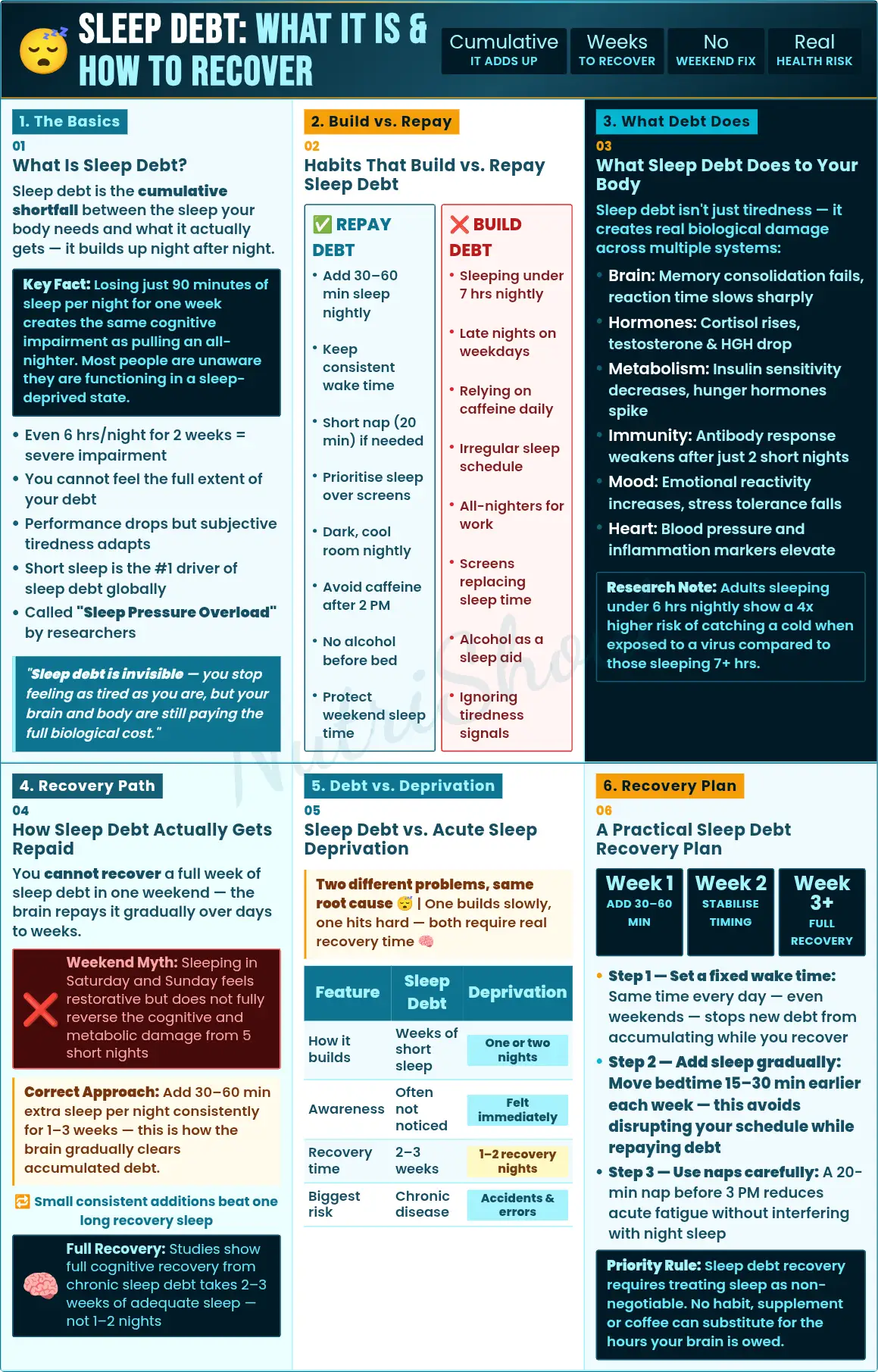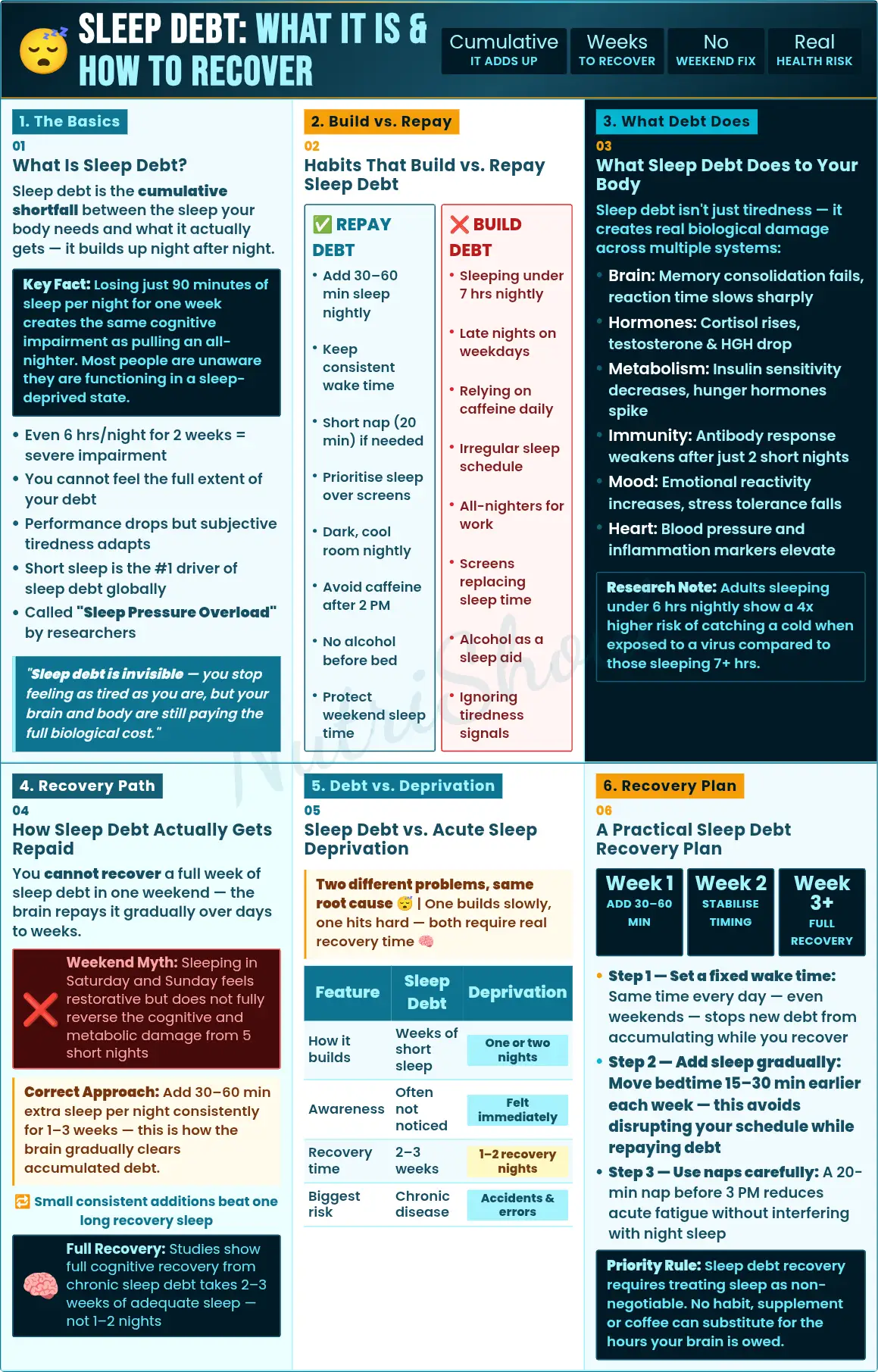
Sleep debt builds up when the body consistently gets less sleep than it needs, leading to cumulative fatigue and reduced performance. Even small nightly deficits can add up over time, affecting memory, focus, reaction time, and overall brain function. It also disrupts hormones, increases stress levels, weakens immunity, and slows metabolism. Unlike short-term tiredness, sleep debt cannot be fully fixed in a single night or weekend, as recovery requires consistent, gradual improvement in sleep duration. Going to bed earlier, maintaining a fixed wake time, limiting caffeine and screen exposure, and prioritizing sleep daily helps restore balance. Over time, proper recovery improves energy, mental clarity, mood, and long-term health.